Share
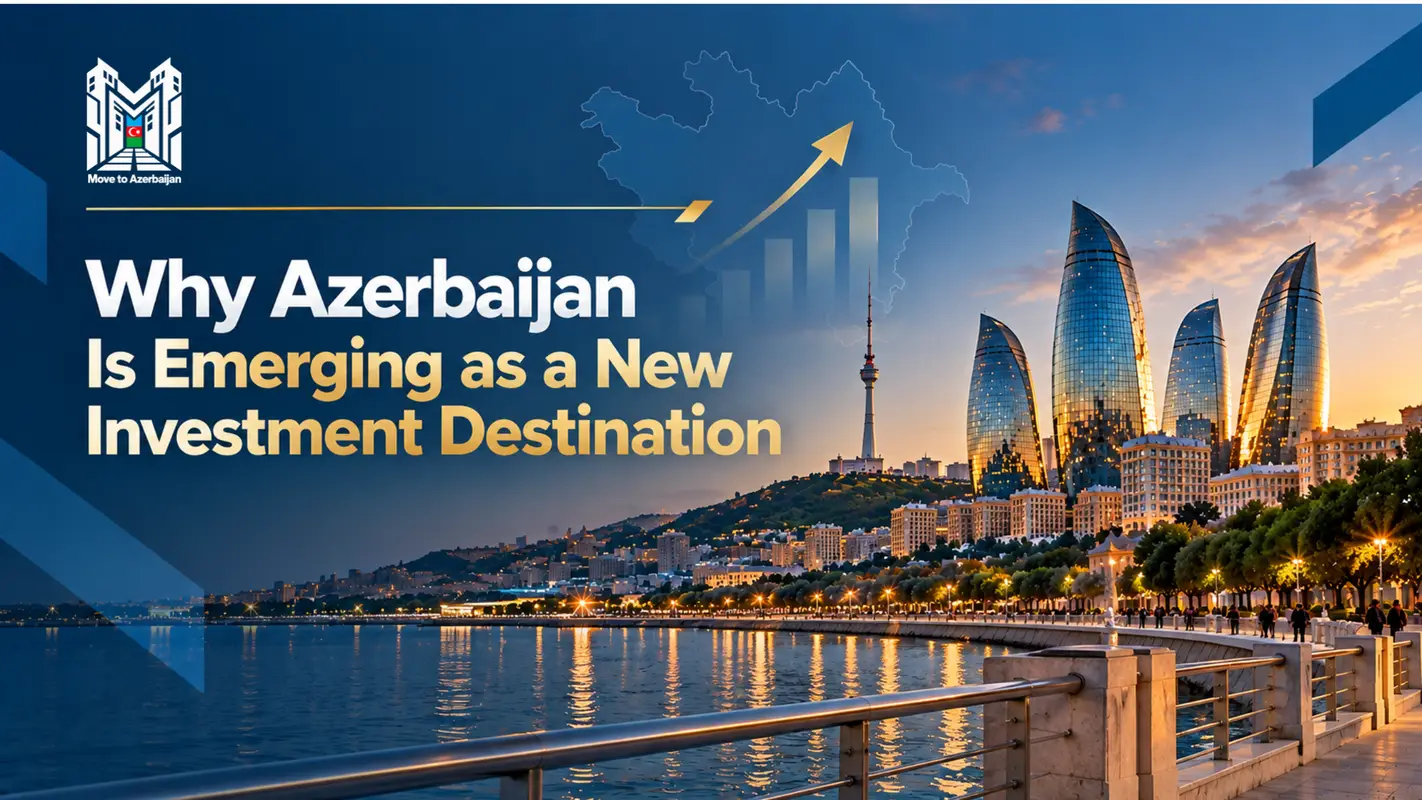
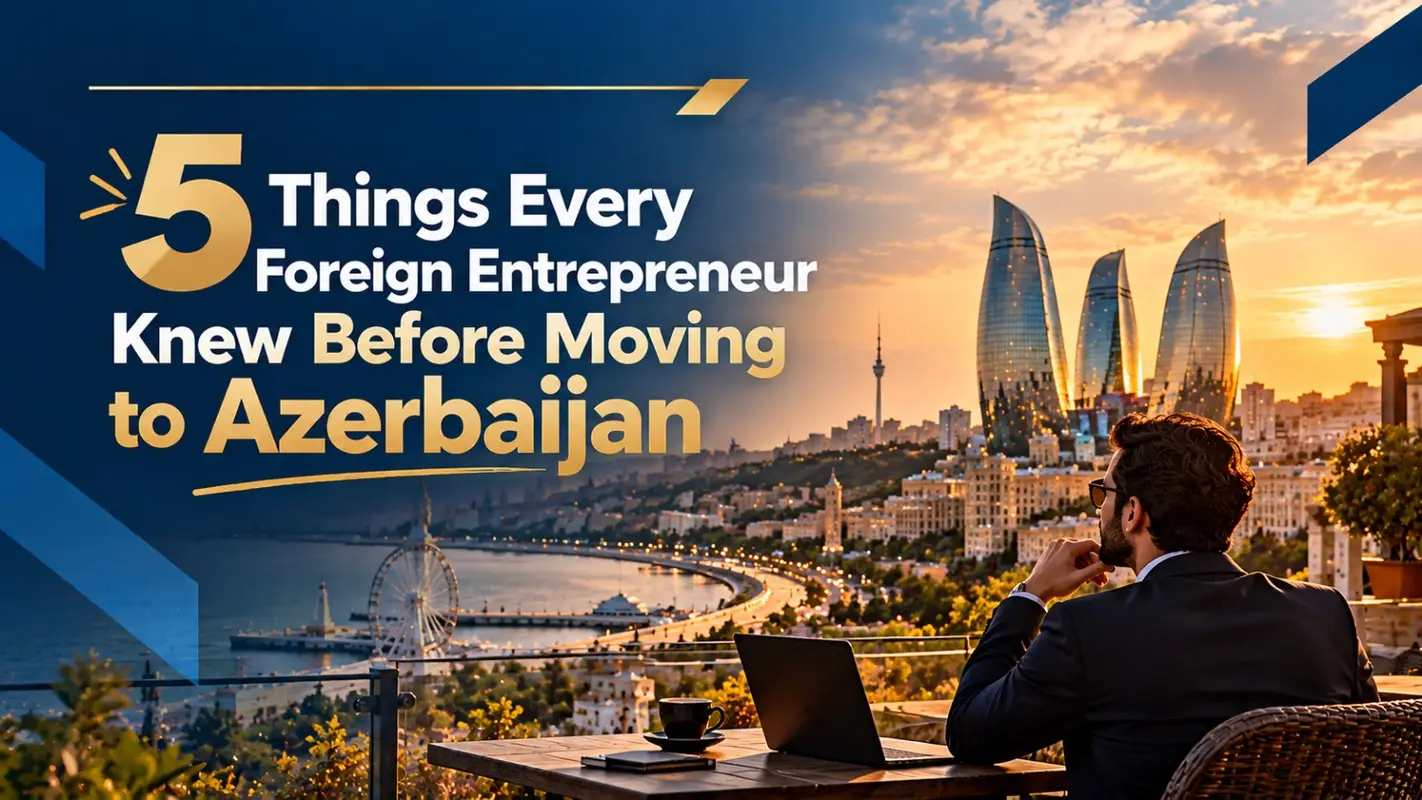
For years, Azerbaijan was largely viewed through the lens of oil and gas. That picture is changing. Today, the country is increasingly positioning itself as a regional hub for investment, trade, energy, logistics and business. Baku’s growing international profile, Azerbaijan’s location between major markets, and the government’s push to expand the non-oil economy are creating a different investment story, one that is attracting increasing attention from international businesses and investors.
The question is no longer simply what Azerbaijan produces. It is also about what the country is building for the next stage of its economic development.
A Strategic Location Between Major Markets
Geography has always been one of Azerbaijan’s strongest advantages.
Situated between Europe and Asia, Azerbaijan sits at the intersection of the East-West and North-South transport corridors. Its position on the Caspian Sea gives it a natural connection to Central Asia, while its links with Türkiye, Georgia, Russia and wider European markets add to its importance as a regional gateway. This is becoming particularly relevant as global trade routes continue to evolve.
The Middle Corridor, connecting Central Asia with the South Caucasus, Türkiye and Europe, is receiving growing attention as companies and governments look for more diversified transport and supply-chain routes. Azerbaijan is seeking to strengthen its role in that network, supported by investment in transport infrastructure and logistics.
At the 2026 Azerbaijan International Investment Forum, the country highlighted its ambition to increase transit cargo capacity to 25 million tonnes or more by 2030. For investors, connectivity matters because it can influence far more than transportation. It can support manufacturing, warehousing, trade, logistics, tourism and regional business expansion.
Baku Is Growing Beyond A Capital City
Much of Azerbaijan’s international investment story naturally begins in Baku. The capital has undergone significant development over the past two decades, combining modern commercial districts, residential developments, hospitality projects and major infrastructure with its historic identity.
For international investors and professionals, this creates an increasingly familiar environment: a modern capital city that remains relatively compact, strategically located and closely connected to the country’s wider economic activity. Baku is also becoming a meeting point for international business.
The 2026 Azerbaijan International Investment Forum brought together governments, financial institutions, international organisations, companies and investors in the city. The previous forum generated investment agreements worth more than $10 billion, with more than $7 billion linked to the non-oil sector.
That does not mean every investment opportunity will be successful, nor does it remove the need for careful due diligence. But it does indicate the direction in which Azerbaijan wants its investment environment to move.
The Diversifying Economy
Perhaps the most important part of Azerbaijan’s changing investment story is diversification. Oil and gas remain fundamental to the economy, but the country is putting increasing emphasis on sectors outside traditional energy.
According to Azerbaijan’s State Statistical Committee, during January–August 2026, non-oil and gas GDP grew by 2.1% year-on-year. The non-oil and gas industry grew by 5.4%, while transportation and storage services increased by 8.7% and information and communication services by 10.7%. These figures point towards a broader economic base.
Manufacturing, logistics, agriculture, technology, tourism, renewable energy and food processing are among the areas receiving greater attention. At the 2026 investment forum, Azerbaijan also highlighted opportunities in digital technologies, artificial intelligence, infrastructure and other high-value sectors.
Investment Incentives Are Becoming More Targeted
Azerbaijan is also using investment incentives to encourage activity in strategic sectors. The country’s investment promotion mechanism has been extended through January 2029 for selected strategic projects. These include renewable energy generation, equipment for renewable energy, waste management and recycling, seawater desalination, industrial parks and certain manufacturing projects.
Eligible projects receiving an Investment Promotion Certificate can benefit from incentives including a 50% reduction in profit or income tax for seven years, as well as exemptions relating to property and land taxes and certain imported machinery and equipment, subject to the applicable rules.
Real Estate, Tourism and Renewable Energy
For international investors, several sectors stand out. Real estate remains closely connected to Baku’s continued urban development and the wider demand created by business, tourism and relocation.
Tourism is another area with room for expansion, particularly as Azerbaijan continues developing destinations beyond Baku and looking at opportunities for year-round tourism.
Then there is renewable energy. Azerbaijan has significant solar and wind potential and has set a target for renewable energy to account for 30% of installed electricity generation capacity by 2030. The country is also exploring the development of green energy corridors connecting Azerbaijan with regional and international markets.
Why Investors Are Paying Attention to This?
Azerbaijan is not without risks or challenges. As with any international market, investors need to understand local regulations, taxation, ownership structures, market conditions and the practical realities of doing business before making decisions. But the direction is becoming clearer.
Azerbaijan is trying to position itself as more than an energy exporter. It wants to become a stronger regional centre for trade, investment, logistics, technology, tourism and business. Its location gives it strategic relevance. Baku provides a growing international business environment. Economic diversification is creating new sectors to watch, while investment incentives are being directed towards strategic projects.
For investors looking beyond the usual destinations, that combination is worth paying attention to. The opportunity is not simply about finding the next place to invest. It is about understanding where infrastructure, capital, policy and regional connectivity are coming together, and Azerbaijan is increasingly becoming part of that conversation.
Sources:
- President of the Republic of Azerbaijan — Investment & Economic Development
- Ministry of Economy of the Republic of Azerbaijan — Investment & Business Opportunities
- State Statistical Committee of the Republic of Azerbaijan — Economic Statistics
- Azerbaijan Renewable Energy Agency — Renewable Energy & Investment
- Azerbaijan Tourism Board — Tourism Development